
By Tim Angel, VP of Global Customer Success, TiVo
The Pay TV market is shifting quickly, as rising content costs, changing viewing habits, and a new wave of sports fragmentation push providers to rethink their identities. In conversations with industry leaders and partners, it’s evident that Pay TV can no longer be defined only as a connectivity service. It’s becoming a technology and entertainment platform designed to help consumers bring together the OTT (Over-the-Top) and live, linear content they want in a way that feels simple yet personal.
Consumers are asking for flexibility, personalization, and a single place to manage it all. The future of Pay TV will depend on how effectively providers bundle content, streamline discovery, and adapt to new behaviors, such as the notable rise of cord revolvers.
Why sports fragmentation is a catalyst for change
Sports is one area where the strain feels most obvious. Fans are forced to juggle multiple subscriptions just to follow their favorite team. The New York Times reports the average NFL fan may spend up to $631.00 to stream games in 2025.
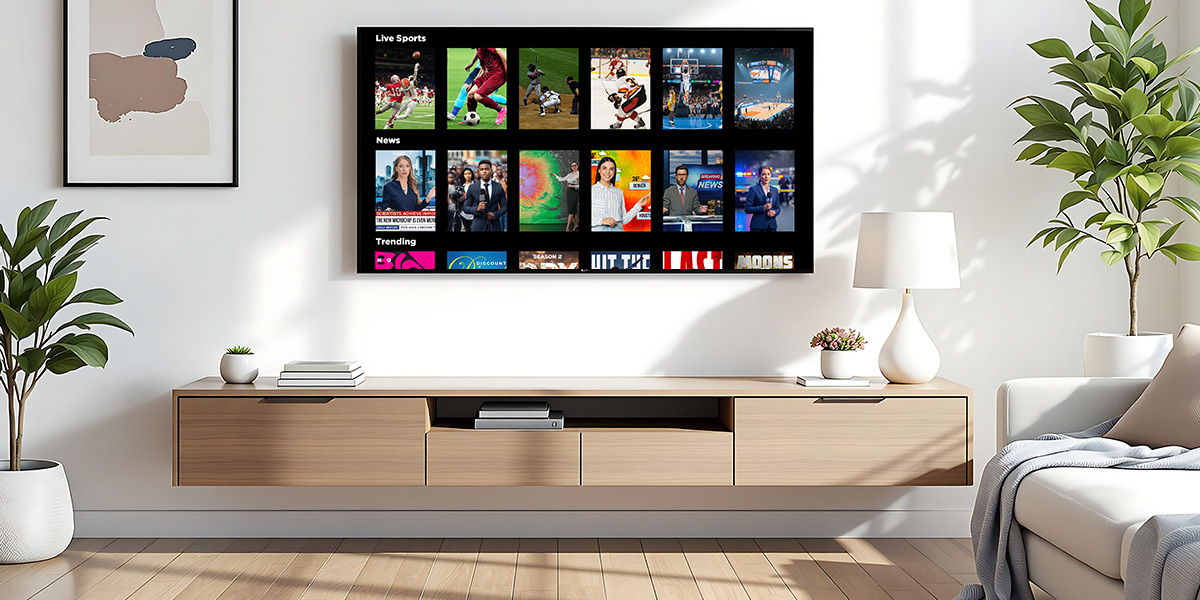
Pay TV providers can reassert their value by simplifying the user experience. Multiview features, sports-focused screens, one-click team filters and bundles built around sports, news, and weather (a modern “core” package) can help fans feel grounded again. Highlighting trending content rather than long channel lists also creates a more personalized experience.
Meeting different generations where they are
Generational preferences add another layer of complexity. Younger audiences want personalized, app-like environments while older adults prefer familiar, linear style navigation. AARP reports that 59% of older adults feel tech is not designed for them, yet they own an average of seven devices and use them daily. Smartphones, smart TVs, and laptops sit at the top of the list, and older adults say technology enriches their lives.
These insights show that a single interface no longer satisfies everyone. Providers can offer tailored experience tiers, from a simplified light client to an enhanced option powered by AI-driven discovery for viewers who want deeper personalization.
Navigating cord revolvers and a more fluid subscriber base
Consumer loyalty is shifting, as viewers increasingly reevaluate the value of long-term subscriptions amid a crowded streaming marketplace. Cord cutters are becoming cord revolvers, signing up to watch a season and cancelling the subscription as soon as it ends. The latest TiVo Video Trends Report shows that 22.5% plan to cut the cord soon, while 31.9% have cut and later returned to Pay TV.
This churn creates an opportunity for providers willing to position themselves as the entertainment solution that adapts to people’s lives. Flexible bundles, OTT access, modular pricing, ad supported tiers and even part time Pay TV models can keep customers engaged longer.
Why Pay TV still matters, and what OTT alone can’t solve
As fragmentation accelerates, Pay TV’s value isn’t competing with streaming. It’s simplifying it. Consumers don’t want more apps. They want fewer decisions. Pay TV uniquely aggregates live, on-demand, and streaming content into one intuitive experience, removing the friction of finding what to watch.
This positions Pay TV as the home screen of the living room, surfacing live sports, local news, and trending content through unified discovery and cross-app search.
With flexible tiers, ad-supported options, and part-time subscriptions, Pay TV delivers a level of adaptability standalone OTT services struggle to match.
Looking ahead: Pay TV’s next evolution
The next era of Pay TV will be shaped by fragmentation, generational differences, and more fluid subscriber behavior.
Winning providers will be predictive, not reactive, using AI-driven personalization, smarter bundling, and ad-supported innovation to stay aligned with how many people actually watch. The result is Pay TV’s evolution into the smartest screen in the home, unifying the entertainment experience while adapting in real time to consumer needs.

Comments are closed.