
The television industry has spent years debating what counts as TV. Yet despite the rapid growth of streaming services, connected TV platforms and changing viewing habits, the question remains surprisingly unresolved.
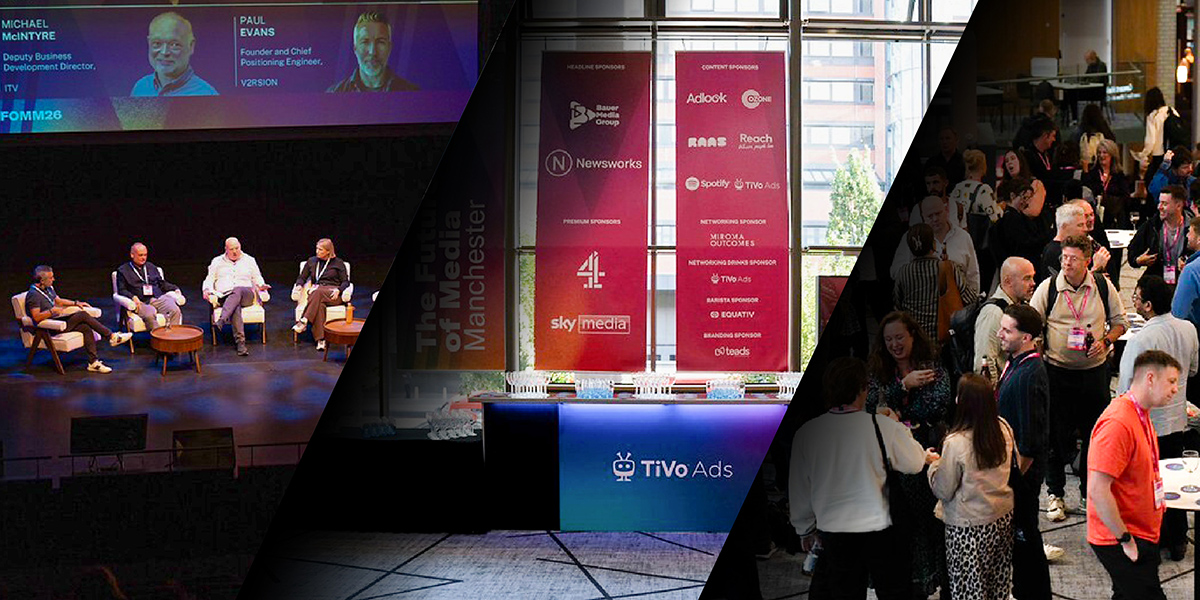
At Future of Media Manchester in September, Dan Conneally, VP, UK Agency Solutions at TiVo Ads, joined industry leaders to explore the future of TV and video planning, including the growing tension between technology-led efficiency and audience-first strategy.
The challenge is increasingly apparent. Consumers move between broadcast television, streaming services, FAST channels and YouTube without giving much thought to industry classifications. Yet advertisers continue to plan, buy and measure these environments through different frameworks.
As Conneally observed: “Viewers aren’t thinking about TV in the kind of terminology that we might talk about across the industry.”
The question is whether these distinctions are helping advertisers make better decisions or making an already fragmented market harder to navigate.
The TV Definition Debate Is Far From Over
Total TV and Total Video frameworks have helped bring greater consistency to the industry. But the boundaries between television and digital video are becoming increasingly difficult to maintain.
YouTube is perhaps the clearest example. As more YouTube viewing takes place on television screens, the platform has become an important component of video strategies, particularly for brands seeking younger audiences. But should YouTube be treated as television simply because it is watched on a TV screen? Or should the definition depend on content, viewing experience and measurement standards? The distinction matters because it shapes how budgets are allocated and performance evaluated.
Conneally acknowledged YouTube’s significant role while calling for greater consistency: “YouTube absolutely has a significant part to play on a video plan. I would suggest it needs to be more aligned with TV in terms of some of the traditional TV standards that we’d expect.”
The issue is not whether YouTube belongs on a media plan, but whether advertisers have sufficiently comparable standards to evaluate its contribution alongside other television environments.
Without that consistency, advertisers risk comparing impressions that deliver very different experiences and outcomes.
Not All TV Impressions Are Created Equal
For all the progress in advertising technology, the industry’s focus on efficiency and automation raises another question: are advertisers losing sight of what makes different media environments valuable?
Programmatic buying has made it easier to trade audiences across platforms, often using common metrics such as impressions, reach and cost.
But not all impressions are created equal. An advertisement appearing on a television home screen as a viewer decides what to watch occupies a different moment in the consumer journey from an in-stream video advertisement. Both offer value but serve different purposes.
Content quality, context, trust and the viewing experience can all influence advertising effectiveness. Yet these factors risk becoming secondary when campaigns are evaluated predominantly through delivery metrics.
Viewing signals can help advertisers understand these distinctions, informing decisions about which advertising opportunities are most relevant to particular audiences and campaign objectives.
The challenge is to move beyond treating impressions as interchangeable and toward a more nuanced understanding of their value.
Measurement Needs to Reflect the Bigger Picture
Advertisers have access to more campaign data than ever before. Sophisticated dashboards, attribution models and performance reporting have created an expectation that advertising effectiveness should be visible almost immediately.
But more data does not necessarily mean better measurement. Reliance on platform-specific reporting can make it difficult to understand how different channels contribute to overall campaign performance, particularly when platforms are also responsible for evaluating the advertising they sell.
There is also a growing tension between short-term accountability and television’s longer-term contribution to brand growth. Under pressure to demonstrate immediate returns, marketers risk undervaluing advertising that builds awareness, consideration and future demand. The answer is not to abandon performance measurement, but to ensure that metrics reflect the objectives of the campaign.
For Conneally, this starts with greater transparency between advertisers, agencies and media partners about the business challenges they are trying to solve.
Establishing those objectives early can help move measurement beyond individual platform reports toward a more comprehensive understanding of effectiveness.
As viewing fragments further, the ability to connect audience insights and evaluate performance across environments will become increasingly important.
Is Automation Getting Ahead of Strategy?
The industry has invested heavily in automation, advanced targeting and data-driven optimization. Advertisers can now build highly specific audience segments and activate campaigns across an expanding range of platforms. But has the availability of these capabilities started to dictate strategy rather than support it?
There is a difference between knowing that an audience can be targeted and understanding whether it is the right audience to pursue.
Who are these viewers? Where and when are they watching? What content are they engaging with? And what does the advertiser ultimately want them to think, feel or do?
These questions should inform strategy before decisions about channels, targeting or technology. Greater precision does not automatically guarantee better outcomes. Nor does access to more data necessarily translate into a competitive advantage. As advertisers increasingly use similar datasets, buying platforms and optimization tools, the opportunity to differentiate through technology alone may diminish. Human expertise, strategic judgment and creativity therefore become more valuable, not less.
Automation can make a media plan more efficient. It cannot, on its own, determine whether the underlying strategy is right.
Audience First, Channel Second
The debate around TV definitions, measurement and automation ultimately points to a broader issue: the industry’s tendency to organize planning around platforms rather than people.
Effective planning should begin with understanding who advertisers want to reach, how those audiences consume content and what role different environments can play in achieving business objectives. Only then should decisions about channels, formats, targeting and technology follow.
A more connected understanding of viewing behavior can help advertisers identify incremental reach opportunities, make informed investment decisions and avoid planning in isolated channel silos. It also reinforces the value of independent audience intelligence that helps advertisers understand viewing beyond individual platforms.
For TiVo Ads, operating across TV platforms, advertising environments and viewership data, this represents an opportunity to help advertisers navigate an increasingly complex entertainment ecosystem.
The industry may continue debating where television ends and digital video begins. But for advertisers, the more important question is how different viewing experiences contribute to campaign effectiveness.
As television becomes more fragmented, effective planning may depend less on adding another layer of technology and more on getting that fundamental principle right.
Watch the full panel here:

Comments are closed.